
Food Safety

The Food Act 1984 regulates the sale of food for human consumption in Victoria in businesses, clubs and community groups that sell food. It attempts to match the level of regulation to the level of risk with the different food activities.

All food businesses that have been classified by council as Class 1 or Class 2 must have a Food Safety Program. A Food Safety Program is a written plan that shows what your club is doing to manage the safety of the food you prepare, serve, manufacture and sell. If your club requires a Food Safety Program, you must ensure you have one that is complete and appropriate for your food related activities, and that a copy is kept on the club premises.

Visit the Department of Health for more information.

It’s important that every venue has qualified food handlers, food safety supervisors and a food safety plan.FoodSmart assists in creating a food safety program, designed for use by class 2 retail and food service businesses in Victoria.It’s also worth talking with your local council who may run food safety courses.

Streatrader is the online registration database for businesses and community groups to register and notify their temporary or mobile food premises, vending machine or water carting business.

Food Safety: Are Restaurant Doggy-Bags Legal? Many people consider it their right to take home any food leftover after a restaurant meal. After all, they’ve paid for it, so why shouldn’t they?  However, they may not know all the facts about doggy-bagging laws and their potential threat to food safety. Many Australian restaurants have begun to ban the popular custom of allowing diners to take home uneaten food – but this doesn’t necessarily mean the practice is illegal. There’s currently no law in Australia that would prevent restaurants from offering their customers take-away containers for leftover food. According to each state’s food board, it’s actually up to the restaurant, but they do recommend erring on the side of caution. These authorities suggest that the containers be dated and the customer is given instructions on how to safely store and reheat the food. Some restaurants are taking this advice a step further and asking those who wish to take home leftovers to sign a legal waiver.

The Risks of Doggy-Bagging

If you are going to take home leftovers, food safety and health experts warn against the potential risks associated with doggy-bagged meals. Lukewarm food acts as an ideal habitat for the rapid growth of bacteria, which can then lead to food poisoning. To reduce this risk, consumers need to make sure they refrigerate the food within two hours. Beyond this, customers are also advised to:

  • Throw away any leftovers that have been out of the fridge longer than 2 hours
  • Reheat food at a temperature of at least 75°C
  • Follow key food safety tips for preparing, storing, and eating leftover food.

Although some restaurants may be reluctant to provide take-away boxes, consumers in Australia are legally permitted to doggy-bag their own meals if they’re willing to run the risk of food poisoning.
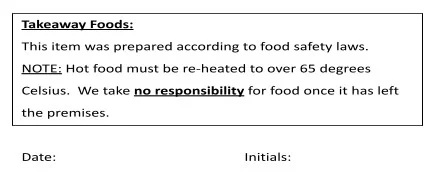
Example of a sticker placed on containers:

All Victorian TAFE’s offer a range of management and general training courses, most also have hospitality skills. Their state-wide presence assists regionally based clubs.

Clubs are reminded that under certain circumstances, training subsidies are available from both the State and Federal Governments. Information relating to these subsidies and related training courses can be obtained from the following links:


Victorian & Federal Governments
Victoria Skills Gateway National Training Information Service
First Aid
St John Ambulance Victoria

Member Benefits

Media Enquiry

"*" indicates required fields

This field is for validation purposes and should be left unchanged.